2026-10-20 · Mike Santucci
What Influences Dumpster Rental Costs in Philadelphia
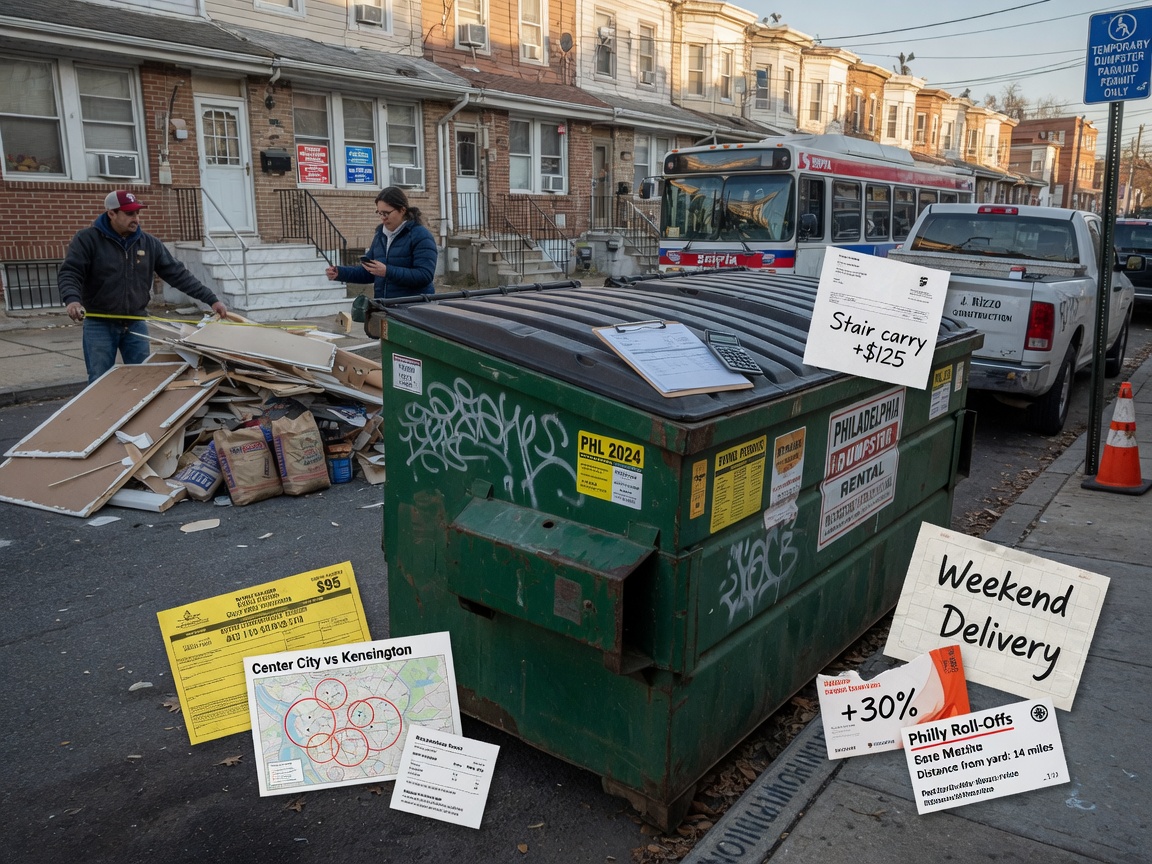
Dumpster rental costs in Philadelphia depend primarily on the container size selected, the length of the rental period, the specific neighborhood where the unit is placed, and whether a Streets Department permit is required. These elements combine with waste material type and current weather conditions to set the final price for each job. Homeowners in row-house areas often need smaller units that fit narrow driveways or alleys, while construction sites in larger lots can accommodate bigger containers that lower the per-yard rate.
Dumpster Size and Rental Duration
Container capacity directly sets the base rate because larger units require more truck time and fuel to transport through Philadelphia streets. Common sizes range from 10-yard to 40-yard models, with 20-yard and 30-yard options used most often for residential projects in South Philadelphia and West Philadelphia. Rental periods usually run 7 to 14 days; extending beyond that adds daily fees that accumulate quickly during busy summer months. Operators at 8950 State Rd. schedule deliveries to match these time frames so customers avoid extra charges while still completing their cleanouts or renovations.
Neighborhood Access and Site Conditions
Tight streets and older housing stock in Center City, Fishtown, and Northern Liberties limit where a truck can safely position a dumpster, which raises costs when extra labor or smaller containers become necessary. In contrast, wider lots in Roxborough or Manayunk allow standard 30-yard units to be placed without blocking traffic. Terrain slopes common in Germantown and Mount Airy can require blocking or leveling equipment, adding setup time. These local realities mean quotes for University City or Kensington jobs often include extra travel considerations compared with flatter sections of North Philadelphia.
Permit Requirements and Regulations
Many placements on public streets or sidewalks in Philadelphia require a permit from the Streets Department before the container arrives. The process involves submitting site details and paying a fee that varies by duration and location, directly increasing the overall project expense. Readers planning a street placement can review the steps in How to Obtain a Philadelphia Streets Department Dumpster Permit. Without this approval, drivers may have to reposition the unit on private property, which sometimes changes the container size needed and therefore the total cost.
Seasonal Weather and Climate Effects
Philadelphia's humid subtropical climate brings hot summers that speed up certain outdoor work but also cold winters that introduce snow, ice, and frozen ground. Winter conditions in areas like Mount Airy or Roxborough can delay deliveries and require extra safety measures, a topic covered in more detail in Winter Dumpster Rental Considerations in Philadelphia. Summer heat in South Philadelphia can soften asphalt under heavy loads, sometimes prompting crews to use plywood or alternative placement spots. These weather-driven adjustments appear on invoices as added labor or equipment fees rather than base rental rates.
Waste Type and Local Service Options
Accepted materials influence pricing because construction debris, household junk, and yard waste each carry different disposal fees at regional facilities. Residential Dumpster Rental projects in neighborhoods such as East Falls or Bridesburg frequently mix these categories, requiring clear separation to stay within weight limits. Overweight loads trigger surcharges that customers can avoid by confirming acceptable items before scheduling. Service pages such as Dumpster Rental list current guidelines so Philadelphia residents can match their project to the right container and avoid unexpected charges.